
ANATOMY OF ADDICTION
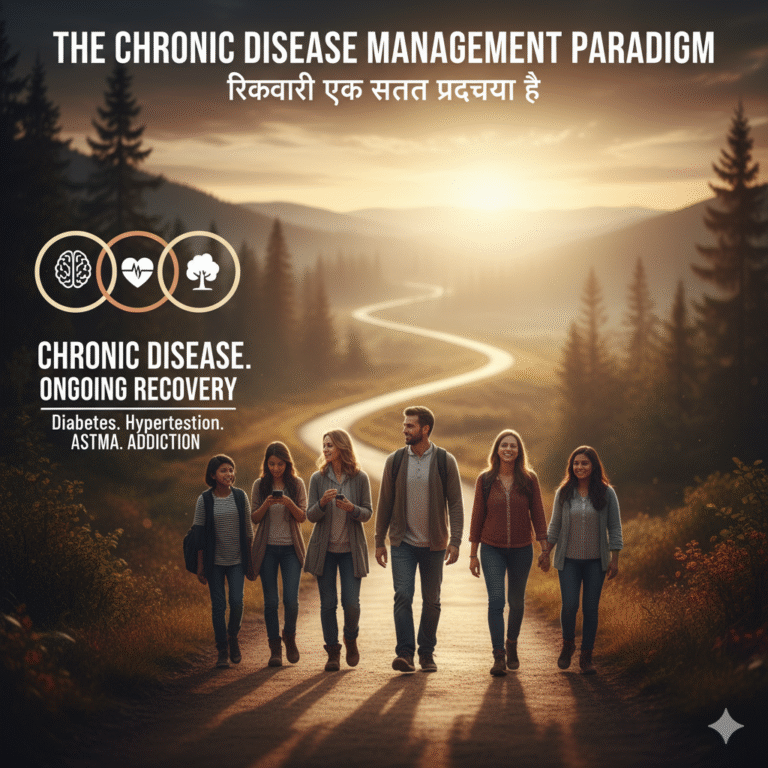
The Chronic Disease Management Paradigm / पुरानी बीमारी प्रबंधन प्रतिमान
Addiction exists within the chronic disease continuum, sharing characteristics with conditions such as diabetes, hypertension, and asthma. The National Institute on Drug Abuse (NIDA) emphasizes that while addiction cannot be “cured” in the traditional sense, it demonstrates high treatability with evidence-based, comprehensive care.
(लत पुरानी बीमारी की निरंतरता में मौजूद है, जो मधुमेह, उच्च रक्तचाप और अस्थमा जैसी स्थितियों के साथ विशेषताओं को साझा करती है। नेशनल इंस्टीट्यूट ऑन ड्रग एब्यूज (NIDA) इस बात पर जोर देता है कि यद्यपि लत को पारंपरिक अर्थों में “ठीक” नहीं किया जा सकता है, लेकिन यह साक्ष्य-आधारित, व्यापक देखभाल के साथ अत्यधिक उपचार योग्य है।)
The brain’s remarkable neuroplasticity enables significant healing and functional restoration through sustained intervention. Recovery represents an ongoing process of management rather than a finite destination, requiring continuous commitment.
मस्तिष्क की उल्लेखनीय न्यूरोप्लास्टिसिटी (तंत्रिका लोच) निरंतर हस्तक्षेप के माध्यम से महत्वपूर्ण उपचार और कार्यात्मक बहाली को सक्षम बनाती है। रिकवरी एक परिमित गंतव्य के बजाय प्रबंधन की एक सतत प्रक्रिया का प्रतिनिधित्व करती है, जिसके लिए निरंतर प्रतिबद्धता की आवश्यकता होती है।

Medical Detoxification
Medical Detoxification is the critical initial phase, focusing exclusively on the safe management of acute withdrawal symptoms as substances clear the body.
(मेडिकल डिटॉक्सिफिकेशन उपचार का महत्वपूर्ण प्रारंभिक चरण है, जो शरीर से पदार्थों के बाहर निकलने पर तीव्र वापसी के लक्षणों के सुरक्षित प्रबंधन पर विशेष रूप से ध्यान केंद्रित करता है)
Rehabilitation
Rehabilitation encompasses the multidimensional process of addressing the psychological, behavioral, and social underpinnings of addiction.
(पुनर्वास लत के मनोवैज्ञानिक, व्यवहारिक और सामाजिक नींव को संबोधित करने की बहुआयामी प्रक्रिया को शामिल करता है।)
Neuroadaptation Support
Adaptogenic herbs like Ashwagandha reduce cortisol and mitigate stress-induced cravings. Brahmi enhances cognitive function and repairs neuronal damage.
(न्यूरो-अनुकूलन समर्थन: अश्वगंधा जैसी एडाप्टोजेनिक जड़ी-बूटियाँ कोर्टिसोल के स्तर को कम करके तनाव-प्रेरित लालसा को शांत करती हैं।)

Dopaminergic Regulation
Mucuna pruriens contains natural L-DOPA, a dopamine precursor that helps restore the reward circuitry damaged by chronic use.
(डोपामाइनर्जिक विनियमन: मुकुना प्रुरियंस (कौंच बीज) में प्राकृतिक एल-डोपा पाया जाता है, जो डोपामाइन का अग्रदूत है। यह पुराने उपयोग से क्षतिग्रस्त हुई इनाम प्रणाली (reward circuitry) को बहाल करने में मदद करता है।)

Hepatic Restoration
Hepatoprotective herbs like Giloy and Kalmegh enhance liver detoxification pathways and accelerate toxin clearance.
(यकृत बहाली: गिलोय और कालमेघ जैसी यकृत-रक्षक जड़ी-बूटियाँ यकृत (लीवर) के विषहरण (detoxification) मार्गों को मजबूत करती हैं, जिससे विषाक्त पदार्थों को शरीर से बाहर निकालने की प्रक्रिया तेज होती है।)

Gastrointestinal Rehabilitation
Substances like Kutki and Triphala support GI repair, addressing the gut-brain axis dysfunction common in addiction.
(जठरांत्र संबंधी पुनर्वास: कुटकी और त्रिफला जैसे पदार्थ आंतों (GI) की मरम्मत में सहायता करते हैं, लत में आम आंत-मस्तिष्क अक्ष के असंतुलन को ठीक करते हैं, जिससे पाचन और मानसिक स्वास्थ्य दोनों में सुधार होता है।)

Relapse Rates:
Relapse Rates: NIDA identifies relapse rates between 40-60%, comparable to other chronic conditions like hypertension (50-70%). Relapse represents a complex interplay of factors, not treatment failure.
रिलैप्स दरें: NIDA 40-60% के बीच रिलैप्स दरों की पहचान करता है, जो उच्च रक्तचाप (50-70%) जैसी अन्य पुरानी स्थितियों के बराबर है। रिलैप्स कारकों के जटिल अंतर्संबंध का प्रतिनिधित्व करता है, न कि उपचार की विफलता का।

Neurobiological Considerations:
Neurobiological Considerations: Enduring neural adaptations create powerful conditioned responses to drug-related cues. These pathways remain primed for reactivation during stress.
(न्यूरोबायोलॉजिकल विचार: स्थायी तंत्रिका अनुकूलन दवा से संबंधित संकेतों के लिए शक्तिशाली अनुकूलित प्रतिक्रियाएं बनाते हैं। ये रास्ते तनाव के दौरान पुनर्सक्रियन के लिए तैयार रहते हैं।)
Therapeutic Reframing:
Therapeutic Reframing: Modern medicine views relapse as valuable clinical data indicating where the treatment plan requires modification.
चिकित्सीय पुनर्निर्माण: आधुनिक चिकित्सा रिलैप्स को मूल्यवान नैदानिक डेटा के रूप में देखती है जो इंगित करता है कि उपचार योजना में संशोधन की आवश्यकता कहाँ है।
Frequently Asked Questions
Evidence-based addiction treatment integrates multiple components: comprehensive assessment, personalized planning, simultaneous treatment of co-occurring disorders (Dual Diagnosis), Medication-Assisted Treatment (MAT), behavioral therapies, family involvement, and continuing care. The most effective programs offer continuity of care and sufficient duration for neural reorganization.
(साक्ष्य-आधारित लत उपचार कई घटकों को एकीकृत करता है: व्यापक मूल्यांकन, व्यक्तिगत योजना, सह-होने वाले विकारों का एक साथ उपचार (दोहरी निदान), दवा-सहायता प्राप्त उपचार (MAT), व्यवहारिक चिकित्सा, परिवार की भागीदारी, और निरंतर देखभाल। सबसे प्रभावी कार्यक्रम तंत्रिका पुनर्गठन के लिए देखभाल की निरंतरता और पर्याप्त अवधि प्रदान करते हैं।)
Medication-Assisted Treatment (MAT) uses FDA-approved medications (like buprenorphine, methadone, naltrexone for opioids; acamprosate, disulfiram for alcohol) to normalize brain chemistry, block euphoric effects, and relieve physiological cravings. They are most effective when combined with behavioral therapies.
(दवा-सहायता प्राप्त उपचार (MAT) एफडीए-अनुमोदित दवाओं (जैसे ओपिओइड के लिए ब्यूप्रेनोर्फिन, मेथadone, नेलट्रिक्सोन; शराब के लिए एम्प्रोसैट, डिसुलफिरम) का उपयोग मस्तिष्क रसायन को सामान्य करने, उत्साहजनक प्रभावों को अवरुद्ध करने, और शारीरिक लालसा को दूर करने के लिए करता है। व्यवहारिक चिकित्सा के साथ संयुक्त होने पर वे सबसे प्रभावी होते हैं।)
Family involvement significantly improves treatment engagement, completion rates, and long-term outcomes. Family therapy addresses dysfunctional patterns, improves communication, establishes healthy boundaries, and educates members about addiction as a brain disorder. Families often require their own support to address codependency and enabling behaviors.
(पारिवारिक भागीदारी उपचार की संलग्नता, पूर्णता दरों और दीर्घकालिक परिणामों में महत्वपूर्ण रूप से सुधार करती है। पारिवारिक चिकित्सा दोषपूर्ण पैटर्न को संबोधित करती है, संचार में सुधार करती है, स्वस्थ सीमाएँ स्थापित करती है, और सदस्यों को लत के बारे में एक मस्तिष्क विकार के रूप में शिक्षित करती है। परिवारों को अक्सर सह-निर्भरता और सक्षम बनाने वाले व्यवहारों को संबोधित करने के लिए अपने स्वयं के समर्थन की आवश्यकता होती है।)
Effective treatment must address both trauma and substance use concurrently through trauma-informed care. Modalities like Seeking Safety or Eye Movement Desensitization and Reprocessing (EMDR) help process traumatic memories while developing healthy coping strategies to replace substance use.
(प्रभावी उपचार को आघात-सूचित देखभाल के माध्यम से आघात और पदार्थ के उपयोग दोनों को एक साथ संबोधित करना चाहिए। सीकिंग सेफ्टी या नेत्र गति विसुग्राहीकरण और पुनर्संस्करण (EMDR) जैसी तौर-तरीके पदार्थ के उपयोग को बदलने के लिए स्वस्थ मुकाबला रणनीतियों को विकसित करते हुए दर्दनाक यादों को संसाधित करने में मदद करते हैं।)
Mindfulness-Based Relapse Prevention teaches individuals to observe cravings and negative affect without reaction. Neuroimaging studies show mindfulness practice strengthens prefrontal regulation of limbic regions, decreasing cue-reactivity and impulsive behavior.
(माइंडफुलनेस-आधारित रिलैप्स प्रिवेंशन व्यक्तियों को प्रतिक्रिया के बिना लालसा और नकारात्मक भावना का निरीक्षण करना सिखाता है। न्यूरोइमेजिंग अध्ययन बताते हैं कि माइंडफुलनेस अभ्यास लिम्बिक क्षेत्रों के प्रीफ्रंटल विनियमन को मजबूत करता है, जिससे संकेत-प्रतिक्रिया और आवेगी व्यवहार कम हो जाता है।)
Mutual-help organizations like Alcoholics Anonymous, SMART Recovery, and Refuge Recovery provide social reinforcement, accountability, practical guidance, and hope through shared experience. Regular participation correlates with improved long-term outcomes.
(अल्कोहलिक्स एनोनिमस, स्मार्ट रिकवरी और रिफ्यूज रिकवरी जैसे पारस्परिक सहायता संगठन साझा अनुभव के माध्यम से सामाजिक सुदृढीकरण, जवाबदेही, व्यावहारिक मार्गदर्शन और आशा प्रदान करते हैं। नियमित भागीदारी बेहतर दीर्घकालिक परिणामों से संबंधित है।)
The Vringra Promise
We stand for purity, transparency, and compassion—values that make us India’s most trusted name in certified herbal de-addiction.
